
Model setup recipes
Last updated
Building a Korean RAG index with Kakao's Kanana-2 3B embedding
It leads on Korean retrieval, and you can cut vectors to 128 dimensions.
We use the retrieval scores on the model card and the weight and vector math to pick a configuration that fits a Mac, then index documents with sentence-transformers.
An embedding model places questions and passages in one space
Kanana-2 embedding is a Korean and English retrieval model Kakao released on October 29, 2026. It turns each document passage and each user question into a numeric vector, then returns passages whose vectors sit closest to the question. The 3B model outputs 2,560 dimensions, the 1.3B model 1,280, and both accept up to 4,096 tokens1 at once.
Kakao converted the Kanana-2 SLM to bidirectional attention2 and pools the token outputs into one vector by averaging. It does not write the next token like a generative model; it reads the whole input once and returns a vector, which is what retrieval, RAG3, and similarity scoring need.
How high are the Korean retrieval scores?
The MTEB numbers were measured without any task prompt4, feeding raw text. On nano-BEIR (ko) the 3B model averages 0.6088 and the 1.3B model 0.5866; across the six Korean retrieval tasks (Ko-Retrieval) the 3B model averages 0.8211. In the same table Qwen3-Embedding-4B scored 0.5522 and 0.7837, and Qwen3-Embedding-0.6B scored 0.4845 and 0.7279.
English ranks differently. On MTEB (eng, v2), Qwen3-Embedding-4B scores 0.6661 against 0.6317 for the 3B Kanana model. Which model you pick depends on whether your corpus is mostly Korean or carries a large English share.
Scroll sideways to compare all columns.
| Model | nano-BEIR(ko) | Ko-Retrieval | MTEB(eng v2) |
|---|---|---|---|
| kanana-2-3b-embedding | 0.6088 | 0.8211 | 0.6317 |
| kanana-2-1.3b-embedding | 0.5866 | 0.7958 | 0.6197 |
| Qwen3-Embedding-4B | 0.5522 | 0.7837 | 0.6661 |
| Qwen3-Embedding-0.6B | 0.4845 | 0.7279 | 0.6311 |
| EmbeddingGemma-300m | 0.4564 | 0.7295 | 0.6247 |
Truncating to 128 dimensions cuts storage twentyfold
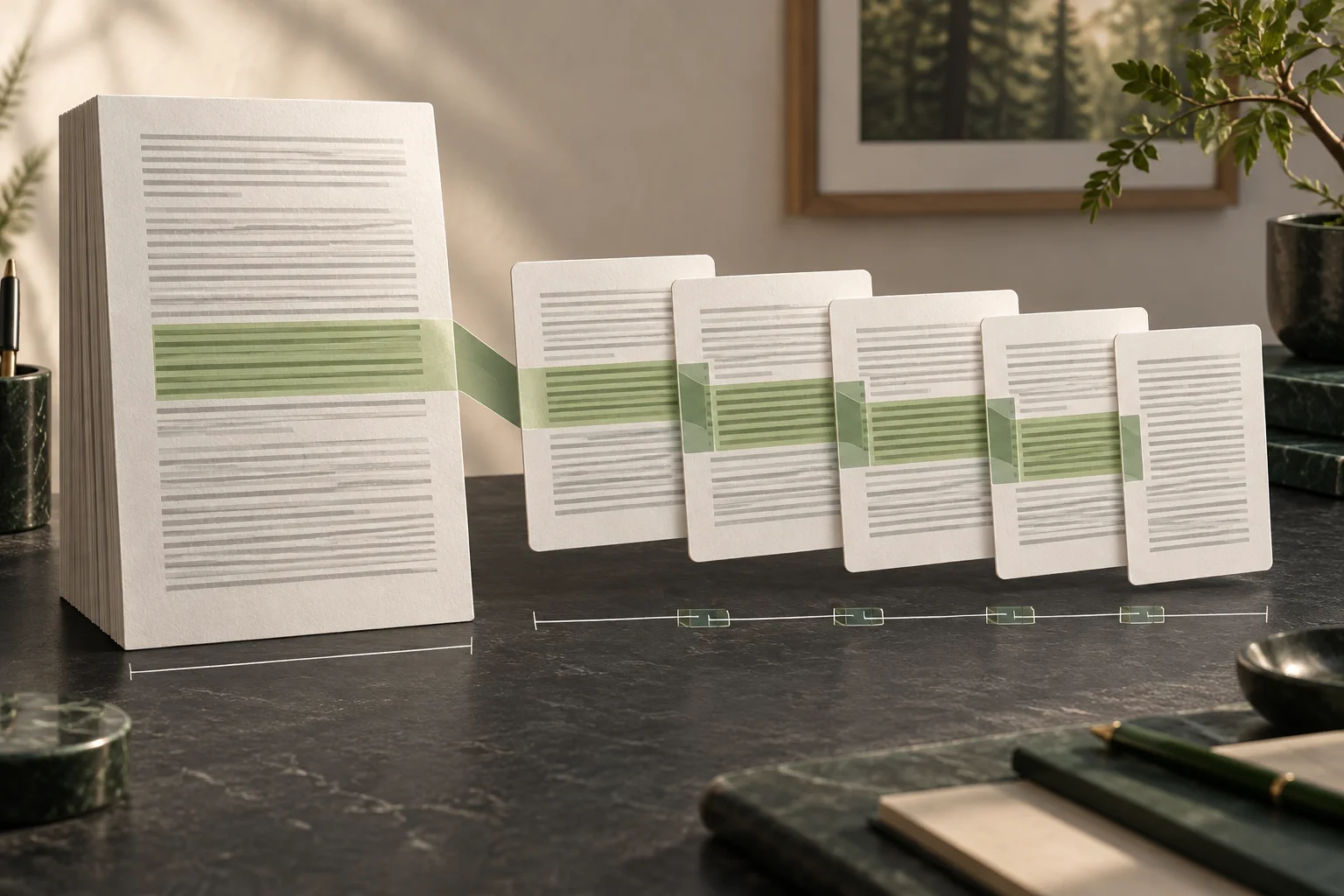
Matryoshka representation learning (MRL) trains the model so that a prefix of the vector still retrieves well. The 3B model can be truncated to 1,024, 512, 256, or 128 dimensions, and at 256 dimensions it still holds 0.5683 on nano-BEIR (ko) and 0.7873 on Ko-Retrieval.
Storage is the dimension count times four bytes. A 2,560-dimension vector costs 10,240 bytes per passage, so 100,000 passages take about 1.0 GB. At 256 dimensions the same passages take 102 MB, a tenth of that, and at 128 dimensions 51 MB, a twentieth. The same disk holds ten to twenty times as many passages.
| Dimensions | 10k passages | 100k passages |
|---|---|---|
| 2,560 | 102MB | 1.0GB |
| 1,024 | 41MB | 410MB |
| 512 | 20MB | 205MB |
| 256 | 10MB | 102MB |
| 128 | 5MB | 51MB |
Indexing documents on a Mac
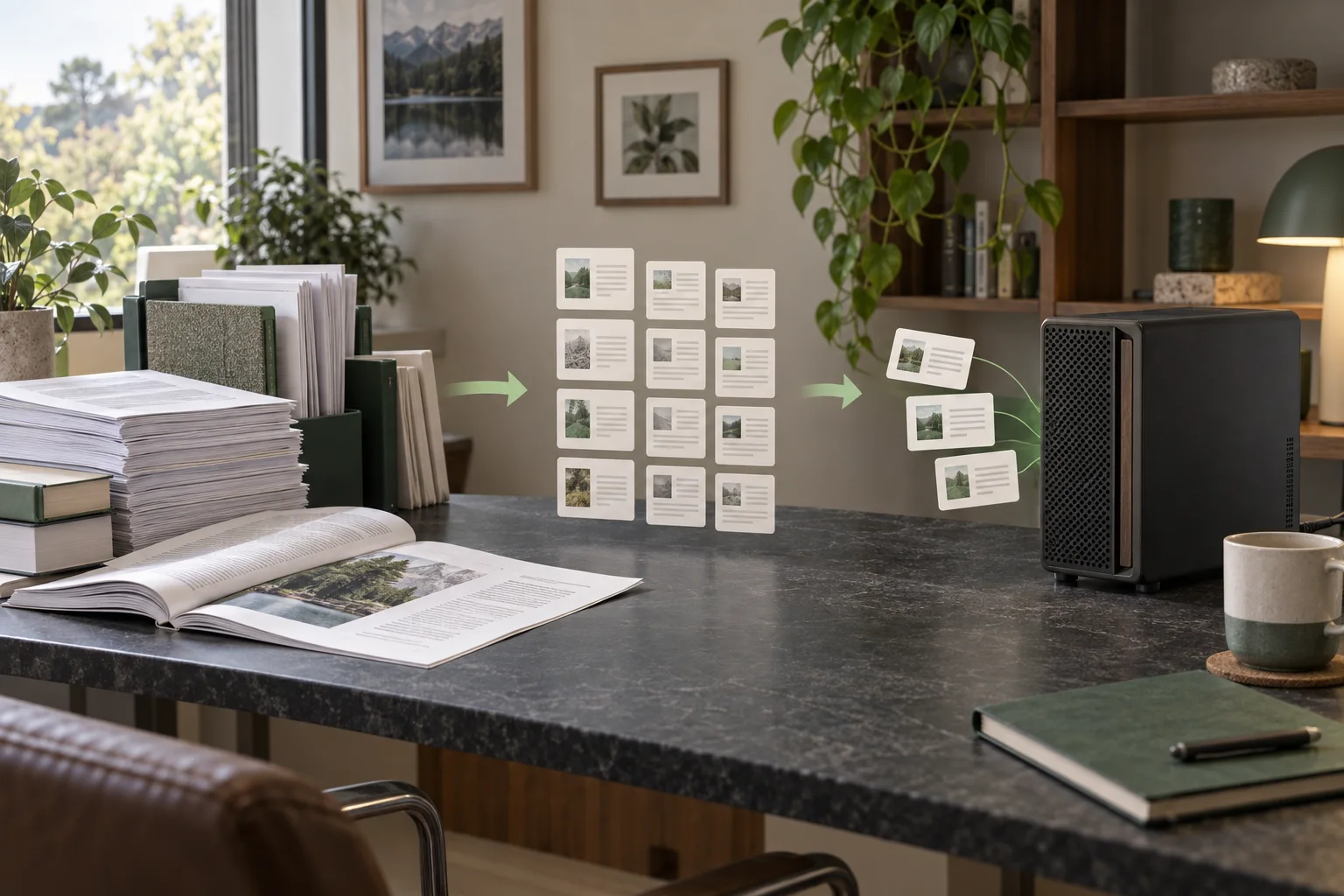
Load the model with sentence-transformers and pass 256 as truncate_dim to truncate in one step. On Apple Silicon, set device to mps to use the GPU5. The first run downloads the weights, so the 3B model needs roughly 6 GB of disk and memory.
Split passages so none exceeds 4,096 tokens, and use the same model and dimension for questions and passages. Rank by cosine similarity, then re-score the top candidates with a reranker if you need more precision. Record the model name and dimension in the index file so vectors from different runs never get mixed.
from sentence_transformers import SentenceTransformer

model = SentenceTransformer(
    "kakaocorp/kanana-2-3b-embedding",
    trust_remote_code=True,
    truncate_dim=256,
    device="mps",
)
vectors = model.encode(chunks, batch_size=8, normalize_embeddings=True)
print(vectors.shape) # (passages, 256)License and limits
The weights ship under the Kanana Open License. Running your own service is allowed, but reselling access through an API6, or selling the model as part of SI or on-device products, needs a separate commercial license from Kakao. Any redistribution must carry the "Powered by Kanana" notice and a copy of the license.
The 3B model is about 6 GB of bf167 weights, which leaves room on a 16 GB Mac, but vectors and source text take more memory as the corpus grows. If English dominates your corpus, compare it with the higher-MTEB model on the same questions; if Korean document search is the main job, build an index with this model first and check whether the right passages come back on top.
Terminology notes
Token — A unit into which a model divides input or output for processing.
Back to the textAttention — A neural-network operation that calculates relationships between input tokens and combines information from each position into the current representation.
Back to the textRetrieval-Augmented Generation — A method that retrieves material relevant to a query, adds it to the model input, and generates an answer from that context.
Back to the textPrompt — The input text sent to a model. For generative models it describes the desired result and strongly shapes the output.
Back to the textGPU — A processor designed to handle many calculations in parallel. It performs model computations during AI inference.
Back to the textAPI — A defined interface that lets other code call a program’s functions.
Back to the textBF16 — A 16-bit floating-point format for model values. Its exponent has the same width as FP32, giving it a similarly wide value range.
Back to the text
Frequently asked questions
- What should you check first in this article?
- We use the retrieval scores on the model card and the weight and vector math to pick a configuration that fits a Mac, then index documents with sentence-transformers.
- How much memory does it need?
- Load the model with sentence-transformers and pass 256 as truncate_dim to truncate in one step. On Apple Silicon, set device to mps to use the GPU. The first run downloads the weights, so the 3B model needs roughly 6 GB of disk and memory.