Purchases and Costs
Wait for the M6 Mac mini or buy an M4? A 24GB and 32GB local AI buyer's guide
A new Mac mini announcement has a way of stopping a purchase at checkout. Waiting sounds prudent; buying the M4 now can feel like choosing yesterday's machine. For local AI, first ask which model you will run and how much document context it needs. Compare M4 and M6 at the same memory capacity, then decide whether waiting changes a task you actually do.
Start with memory, not a model year
Both the M4 and M6 Mac mini come in 24GB and 32GB configurations. Begin with M4 24GB versus M6 24GB, or M4 32GB versus M6 32GB. Comparing an M6 24GB with an M4 32GB and expecting the newer chip to erase a memory shortfall confuses two decisions. Unified memory is shared with macOS, the browser and document apps. A model file smaller than 24GB is not proof that a long prompt will fit comfortably. Pick the quantized model and context length you intend to use, and account for your ordinary open applications. Once capacity is settled, the generation comparison becomes meaningful.
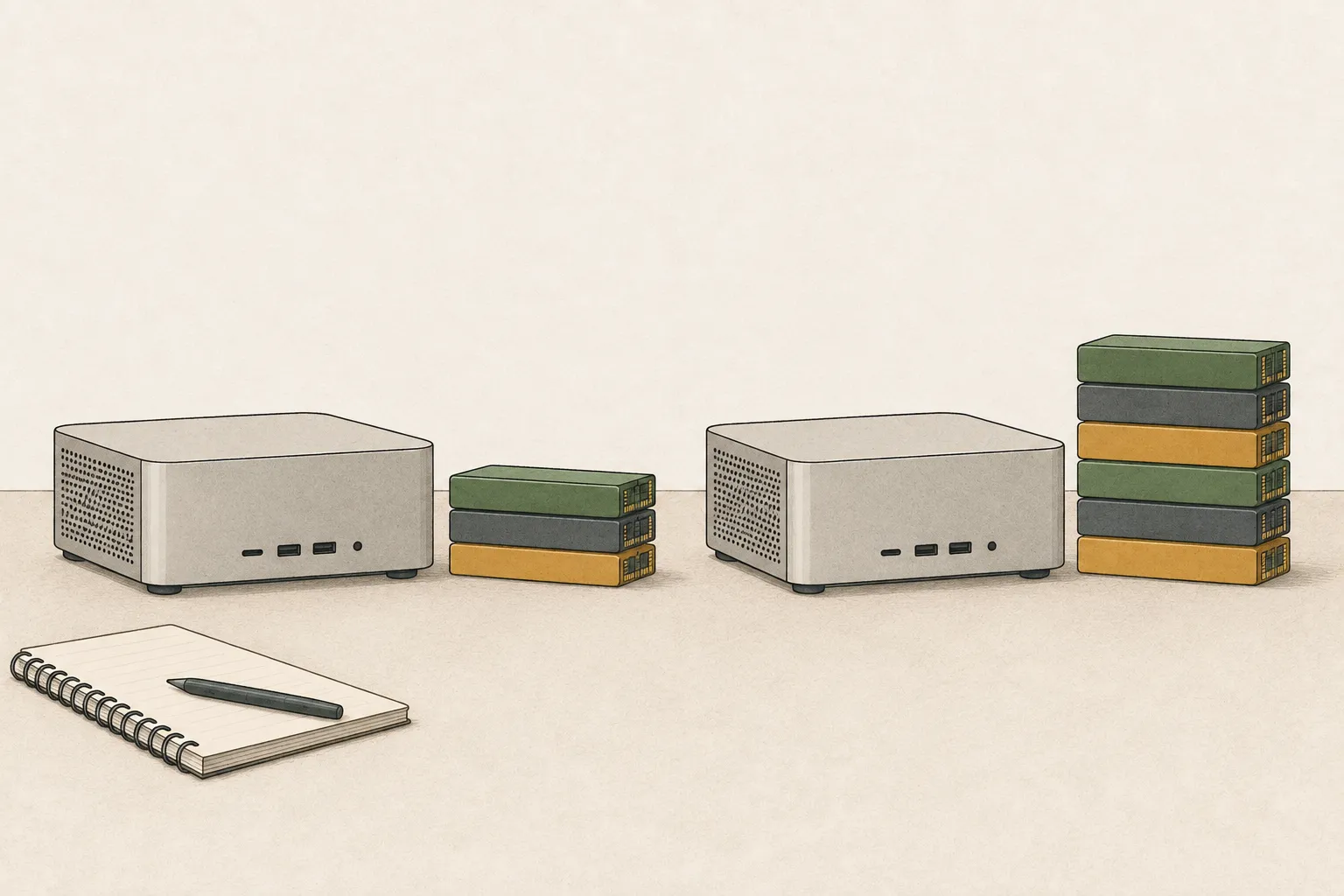
A sensible place to stop at 24GB
If you ask short questions and alternate between one or two modest models, 24GB may be enough. Enough does not mean a model launched once in an empty desktop session. It means you can search in a browser, ask several questions and move the answers into a document without rearranging your day around memory. Look separately at initial loading, time to the first answer and subsequent text generation. If your chosen model has room to spare and its answers are useful, a hypothetical future model is not by itself a reason to pay for 32GB. If 24GB works only after closing every other application, however, running is not the same as comfortable use.
When 32GB changes the working day
The eight extra gigabytes can change your routine if you repeatedly attach long PDFs or codebases, or close other applications whenever AI starts. Long input needs room for context in addition to model weights. Do not place a model file size next to the number on the box and call the comparison finished. The concrete reason to choose 32GB is the ability to finish recurring work while your other applications remain open. But if a model already fits comfortably in 24GB and only text generation feels slow, buying 32GB is not an automatic tokens-per-second upgrade. Examine the chip, runtime and settings for that problem.
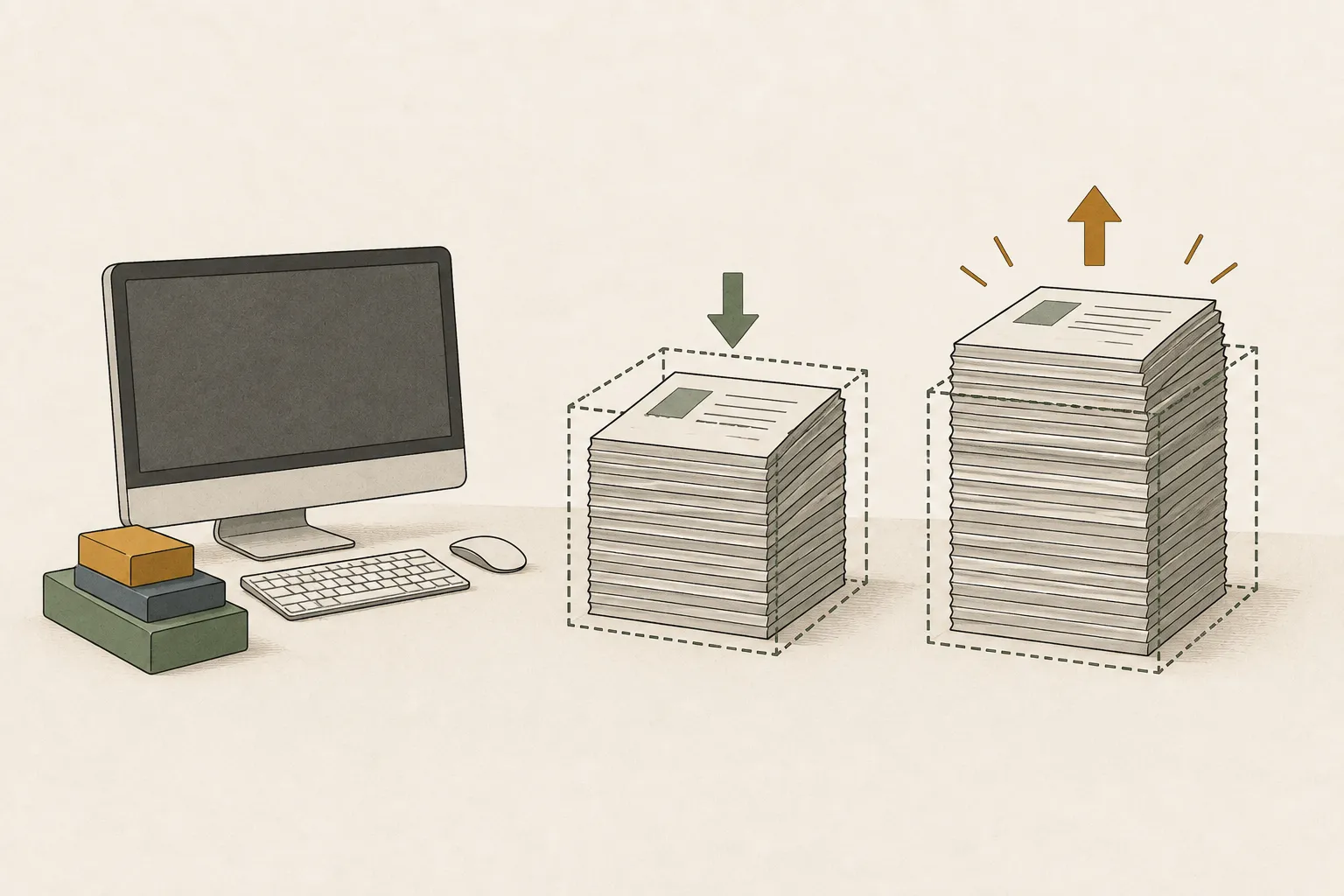
Apple's launch figures are not your token rate
Apple describes faster CPU and GPU performance and more memory bandwidth for M6. Its stated maximum bandwidth is 170GB/s, against 120GB/s in the M4 Mac mini's published specifications. Those numbers give a reason to investigate the new chip, but they do not calculate tokens per second for your model. Apple's ‘up to’ AI claims also belong to particular tests and comparison systems. A long prompt and a short generated answer can have different bottlenecks, and runtimes such as MLX need not behave alike. Until measurements use the same model file, input length and app version after the September 22 launch, treat the site's M6 speed as an estimate for narrowing choices.
If work starts now, an M4 is still a decision
If you have documents or coding work to do now and have confirmed a suitable M4 model and memory capacity, the time spent waiting has a cost too. That does not mean remaining M4 stock is automatically a bargain. Write down the checkout price for the same 24GB or 32GB capacity and SSD size, then compare it with the M6 configuration. Check the seller's return window as well. If the discount is small and waiting a few days does not interrupt your work, post-launch measurements will improve the decision. If you already own an M4, the bar is clearer still: name the recurring task it fails before replacing it because a new model was announced.
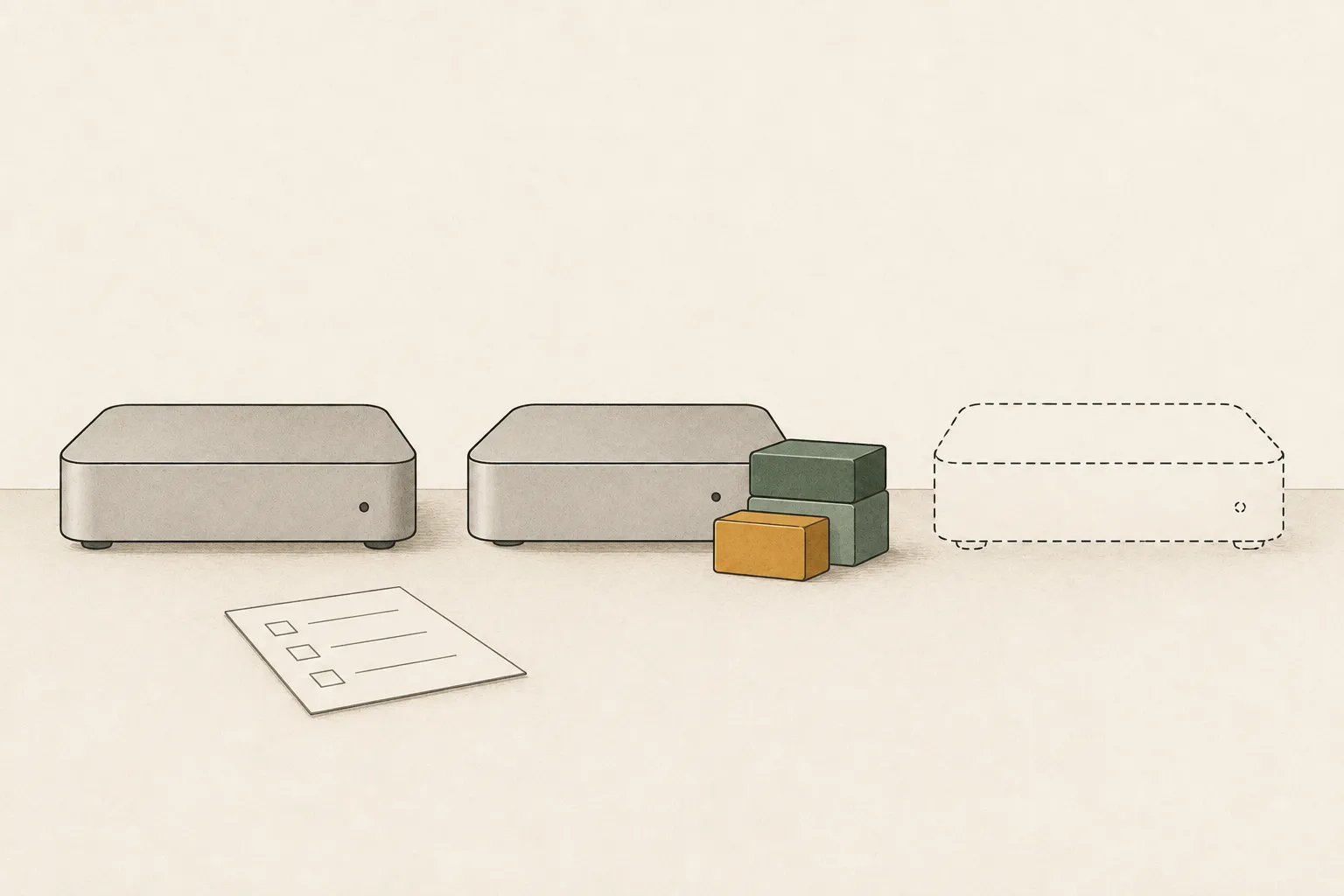
Change one variable in the comparison
Compare M4 24GB with M6 24GB using the same model, quantization and input length; then repeat for the two 32GB configurations. That sequence separates chip generation from memory capacity. Look at the total wait including prefill and at generation alone. Someone reading long PDFs and someone having brief chats may reasonably reach different conclusions from the same tool. Keep the M6 pre-release numbers labelled as predictions. Before ordering, verify that the seller's chip, memory and SSD match the configuration you compared. If both machines meet your needs, the decision can rest on when you need the computer and the actual price difference.