read first
Transcribe Korean recordings on your own computer with whisper.cpp
A recording is reassuring until you need to find one sentence buried in it. Uploading the file may not be an option. This guide takes one Korean recording through whisper.cpp on your own computer, then shows what to check before trusting the transcript or shopping for faster hardware.
The costly part is finding the right moment again
A one-hour meeting may leave only a few lines you need. Finding where those lines were spoken can take another hour of scrubbing and replaying. A transcript is an index into the recording, not a reason to discard it. Keep the original when names, numbers or dates matter, and listen again before quoting a consequential sentence. This changes the goal from chasing a model score to reducing the time spent checking the record.
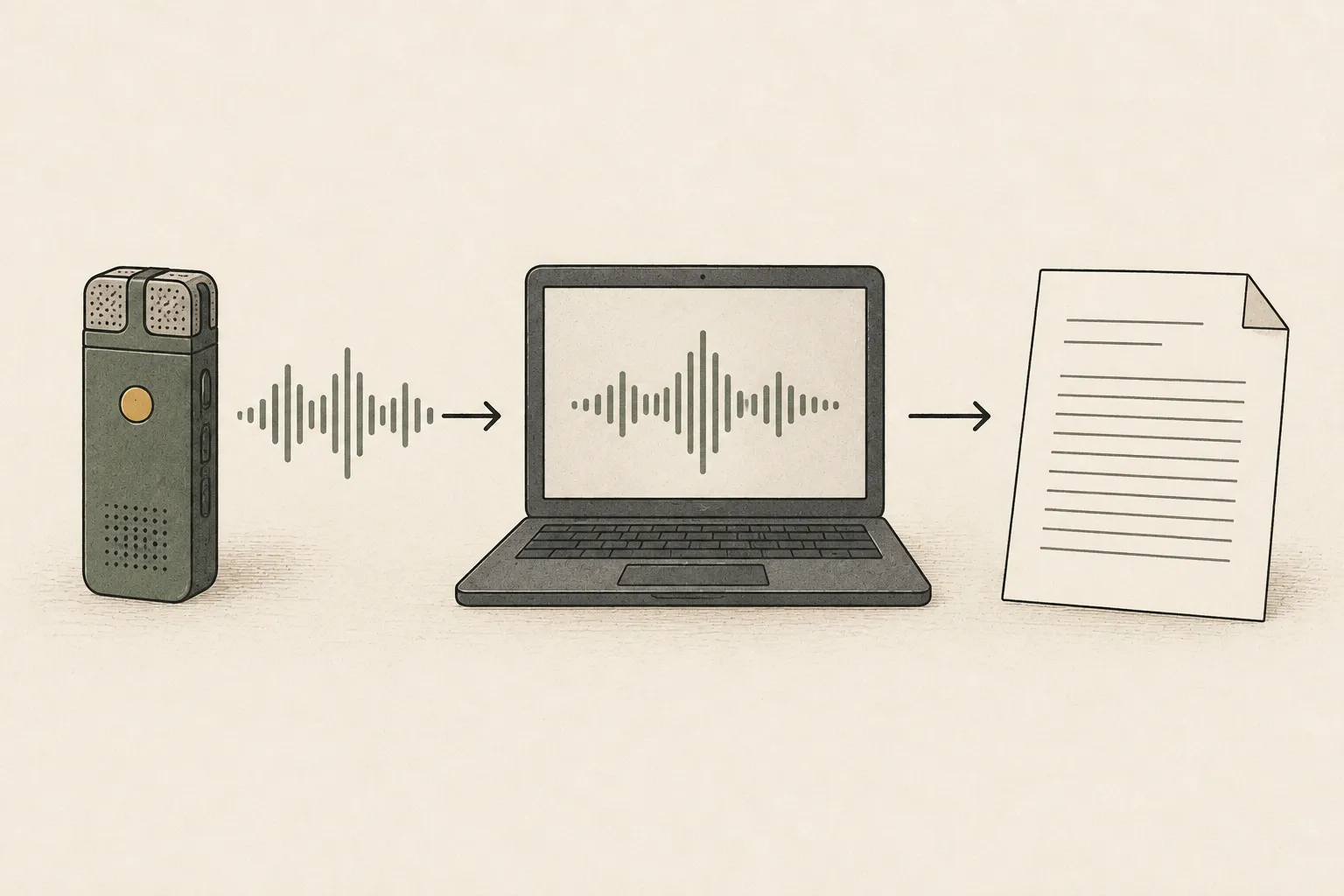
For Korean, avoid the English-only files
The model list contains pairs such as base and base.en. The .en suffix marks an English-only file, so use a multilingual model such as base, small or medium for Korean. Start with five minutes of a typical recording on small. If proper names still fail in otherwise clear speech, try a larger multilingual model on that same segment. Larger files cost storage and runtime memory. Downloading the largest one first tells you little about whether it will save time on your own audio, and a multilingual label cannot guarantee technical terms will be right.
Run one file with the documented command
Clone the official repository, then build with cmake -B build and cmake --build build -j --config Release. Download the multilingual small model with sh ./models/download-ggml-model.sh small. With a 16 kHz mono 16-bit WAV file ready, run ./build/bin/whisper-cli -m models/ggml-small.bin -f recording.wav -l ko -otxt -of transcript. Put transcript.txt beside the original audio when it finishes. These are the documented CLI options combined for a Korean file; build prerequisites and executable paths can vary by operating system, so consult the project's current instructions if your build differs.
Convert phone recordings before blaming the model
A file that will not open and a transcript that mishears Korean are different problems. The project's quick start uses 16-bit WAV for whisper-cli. Convert an MP3 with ffmpeg -i input.mp3 -ar 16000 -ac 1 -c:a pcm_s16le recording.wav before retrying. Renaming a phone recording to .wav does not convert its audio format. Play the converted file, and if the original has separate channels, check that combining them did not lose a speaker. Test a short excerpt before committing a long meeting to a broken input path.
Review the errors that matter
Do not turn a smooth first draft straight into meeting minutes. One company name or a missing negation can change the meaning of a decision. Mark names, amounts and negatives, then replay those parts. Silence and overlapping speakers can produce plausible text that was never said, or obscure who said it. A plain transcript does not reliably identify speakers for you. Include correction time when you judge whether the workflow is useful enough to repeat.
Use the acceleration your machine already has
whisper.cpp supports Metal on Apple Silicon and a CUDA build for NVIDIA GPUs. Neither label tells you how long your one-hour recording will take: model choice, recording length, silence and runtime settings all matter. Run the same five-minute segment twice with the same model, then note the second run and the corrections required. When comparing machines, include preparation and review as well as inference. If your current computer handles the weekly queue comfortably, a text LLM tokens-per-second chart is not a reason to buy a GPU for transcription.
What would justify new hardware?
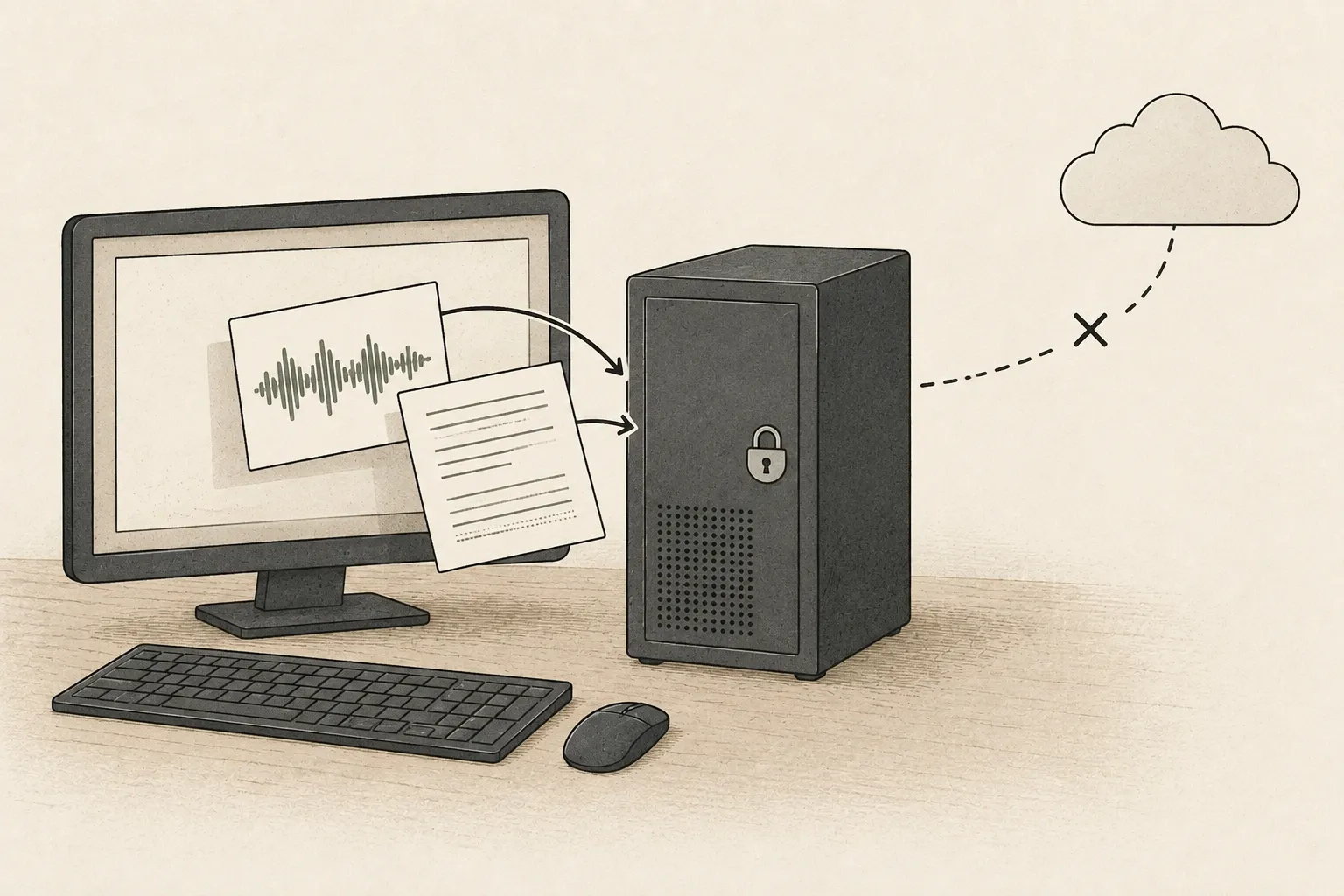
Hardware becomes worth comparing if a growing weekly queue blocks your work and a larger multilingual model genuinely reduces corrections on your recordings. Check free memory alongside your usual apps, storage, noise and power before choosing a machine. If only a few sections are urgent, process those excerpts first. For private recordings, also check whether the input and transcript folders sync to a cloud service; local inference alone does not control file sharing. Faster hardware cannot review a misheard name for you.