New model · 2026-09-04
GLM-5.3 and DeepSeek-V4: open weights, but for a personal PC?
When you try to receive the file upon hearing that the weights have been released, you may be surprised by its size. Does OpenWeight mean that anyone can run it on a small PC? Larger models such as GLM-5.3-Flash and DeepSeek-V4-Flash must be read separately depending on whether they are public or not and the size of the running equipment.
An environment you control is not necessarily one desktop PC
Open weight means that you can handle it directly by receiving weights under certain licensing conditions. Just because the file is public doesn't mean that the requirements for memory and executable programs become smaller. It can run on multiple servers operated by one company without the need for an external inference service.
So the term local can encompass different scales, from personal laptops to an organization's internal servers. If you read the server example in the model announcement like the installation instructions for a single graphics card, you may misjudge the equipment conditions.
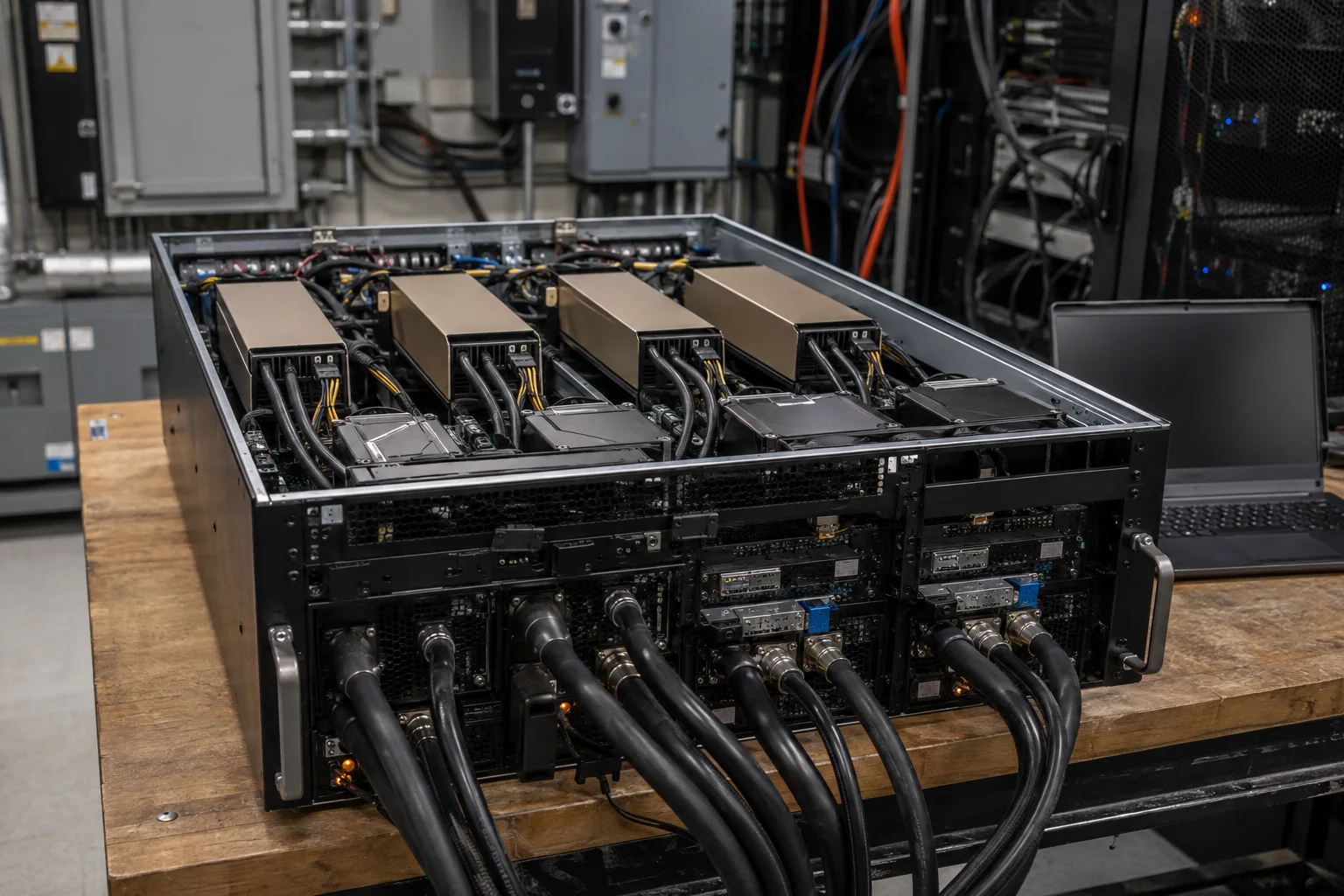
A small active count can hide a large memory requirement
GLM-5.3-Flash registered on this site is about 320B in total and about 18B active, and DeepSeek-V4-Flash is about 304B in total and about 13B active. The active figure is the path written by one token and does not reduce the entire file to that size.
Even if you change to lower precision, you still need to combine the entire weight, cache and runtime space. Deciding which model is lighter cannot be determined based on a single number without the file format and partition path. Community compressed versions and official checkpoints also have different conditions.

The interconnect is part of a multi-accelerator setup
When the model is divided, each GPU stores its weights and state and exchanges necessary results during calculation. Not only the number of GPUs and memory sums become important, but also the actual connectivity and parallelism of the runtime.
If the official example uses a specific server node, plugging in the same number of consumer GPUs will not result in the same configuration. Memory, connection bandwidth, and supported kernels vary for each card. Before copying a command, you must check the equipment that the command is based on.
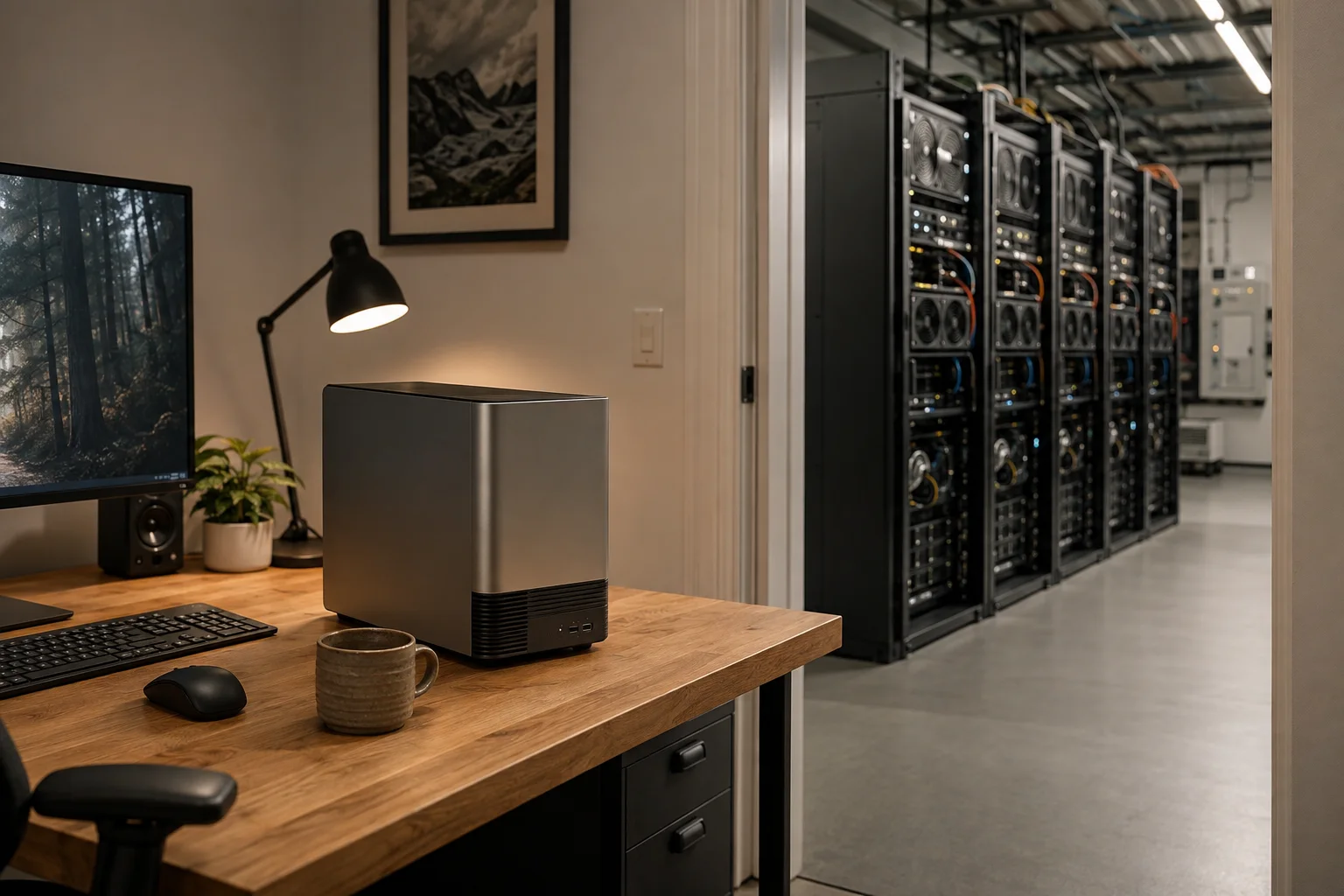
Even a large-memory Mac needs a compatible model and runtime
Larger integrated memory expands the possibilities for holding compressed copies, but whether your app can handle new model structures is another matter. Even if the download is possible and the capacity calculation is correct, the actual execution may fail. A reproduction record of the conversion and version is required.
Using all of the maximum contexts also increases the cache and input processing burden. After the model is turned on, you need to start with short questions and expand them into longer documents. When you get the results, you need to check not only the speed but also whether you missed any important content in the document.
Do you have a task that really requires a large model?
If a larger model more accurately addresses questions that were not addressed by a smaller model, there is reason to consider the cost. For servers that will be shared by multiple people, total throughput and operational control are also valuable. However, I need to check whether the differences in the model leaderboard are also reflected in my work.
If one person just wants to start documenting and coding, a smaller model will suffice. Just because you can't run a big public model right away doesn't mean you can't get started with local AI. You can start at a scale that produces the results you need, and expand when you find the reason why it is lacking.